
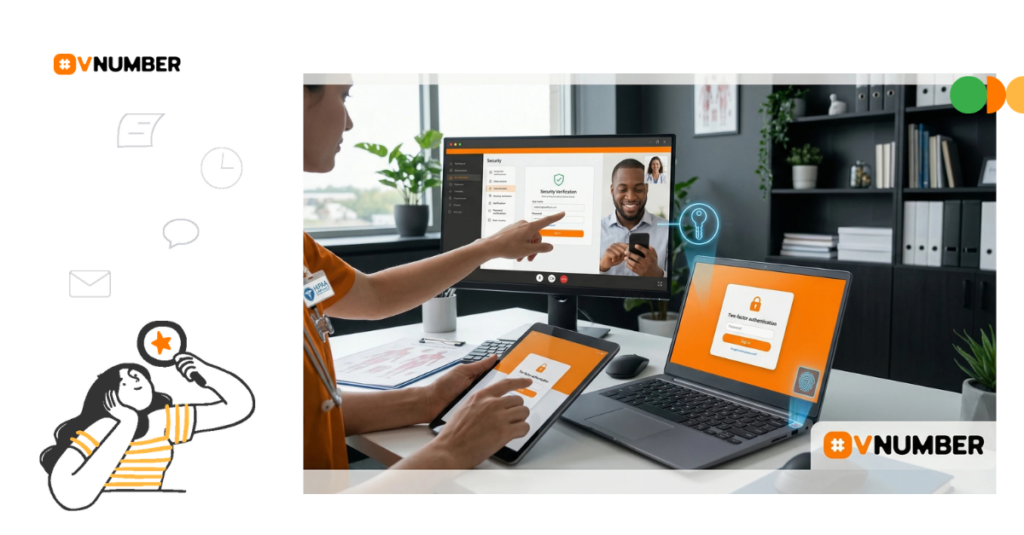
Why a patient portal can reject your phone
You log in to check your lab results, reset your password, and still get blocked. The portal says your phone is not secure, or it refuses to send the verification code.
In many cases, the issue is not your password. It is the system’s confidence in the phone number tied to your patient portal account.
That friction can show up after a carrier change, a long trip abroad, a SIM swap, or a switch to a temporary or app based number.
From the patient side, it feels arbitrary. From the portal side, it is usually part of a broader security model designed to protect sensitive health data.
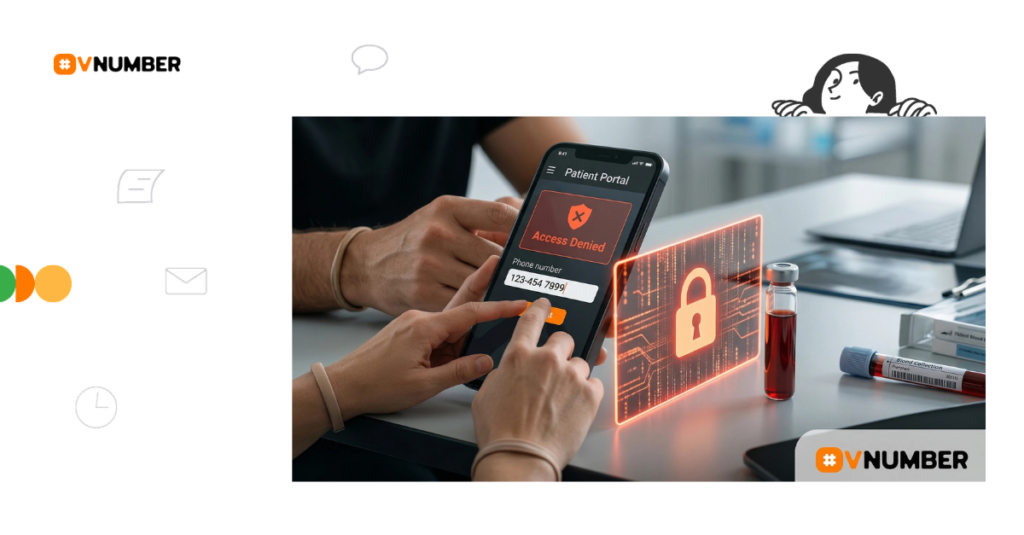
Portals built around HIPAA aligned security do more than check a password. They often rely on 2FA, device recognition, and phone based verification to decide whether the login attempt looks trustworthy enough to proceed.
What telehealth and hospital portals often verify
Many healthcare portals use a layered login process before giving access to lab results, prescriptions, appointment history, and clinical notes. That process may include:
• your password or account credentials
• SMS verification or another form of 2FA
• device recognition or browser consistency
• checks on whether the phone number appears stable and still tied to your account
The exact logic varies by provider. Epic MyChart, Cerner, Athenahealth, and other portal systems do not all treat phone verification the same way.
Some may be stricter with foreign numbers. Some may be more cautious with numbers that look temporary or recently changed. Others may allow more flexibility.
HIPAA itself does not require a “secure non temporary phone number” in those exact words.
What it does require is reasonable protection for electronic health information. Many providers implement that requirement through security controls that treat phone stability as one useful trust signal.
Why some numbers create more friction
The gap between “this phone can receive texts” and “this portal trusts this phone for secure access” is where most users get stuck. A portal may become more cautious if the number:
• looks like a VoIP or app based line
• appears recently changed, ported, or reassigned
• no longer matches the account’s previous login pattern
• belongs to a foreign carrier
• cannot receive SMS verification reliably from US senders
That does not always mean the number is unsafe. It means the portal may not have enough confidence to use it for access to protected health information.
This is why travelers, expats, and patients who change carriers often run into problems. You may still be the legitimate account holder, but the portal is responding to a phone setup that now looks inconsistent with the history attached to your account.
What changes when you live or travel abroad
If you cancel your US plan, start using a local SIM, or rotate between temporary numbers, the healthcare portal may lose one of the signals it previously used to verify you. That can affect:
• login approval
• 2FA delivery
• account recovery
• password reset flows
• follow up verification after suspicious activity
In practice, one blocked code can turn into a much bigger access problem.
If you cannot receive the login code, and the portal still trusts only the old number, regaining access may require contacting the provider directly and going through additional identity checks.
That is why continuity matters. The issue is often not just logging in once. It is keeping access stable over time.
Why a stable US number still matters
A stable US phone number does not guarantee portal access, and it does not override a provider’s security rules. What it can do is reduce one common friction point in a security flow that already has several moving parts.
Portal systems often respond better to a number that stays active, keeps receiving SMS, and remains tied to the same patient account over time. That kind of continuity can help support:
• SMS verification
• account recovery
• follow up identity checks
• provider changes across multiple portals
For patients living outside the US, this is where a continuity tool becomes practical.
If you need to keep a working US number tied to your healthcare logins while traveling or living abroad,VNumber can help support that continuity without depending on an active US carrier plan.
If you need a stable US number for healthcare related verification, account recovery, and ongoing access to your patient portal, get your number with VNumber and keep your access active wherever you are:
https://www.vnumber.com/get-your-number
Pre travel preparation checklist
Before traveling, relocating, or changing carriers, check these points while you still have full access.
Portal access checklist
• Confirm which phone number is currently linked to each patient portal
• Test whether that number still receives SMS verification from US senders
• Enable an authenticator app if the portal offers it as a backup to SMS
• Save the provider’s support number outside the app itself
• Keep your username, linked email, and recovery details stored securely
• Download any critical records before changing your phone setup
This kind of preparation often makes the difference between smooth access and an urgent support call when you need records quickly.
Frequently Asked Questions
Can I use a Google Voice number for medical portal verification?
Many portals may treat Google Voice and similar VoIP numbers as less reliable for verification, especially when the portal expects a standard mobile line for SMS verification. A traditional US mobile number is often more dependable.
How long does it take to update my phone number with a medical portal?
That depends on the provider. In some cases it can be done quickly. In others, it may require contacting the provider’s office directly and completing additional identity checks before the number is updated.
What happens if I cannot access my portal while traveling and need urgent medical records?
Contact your healthcare provider’s office directly. Many offices can help you obtain critical records through other secure channels while you work on restoring portal access.
Do all medical portals have the same phone number requirements?
No. Each portal system may handle verification differently. Some may be stricter with foreign numbers, some may be cautious with temporary lines, and others may allow a wider range of SMS capable numbers.
Is it worth keeping a US phone setup just for medical portal access?
For frequent travelers and expats, keeping a stable US number can be a practical way to reduce friction in portal login, account recovery, and ongoing access to sensitive health information. Whether it is worth it depends on how often you rely on US healthcare services and how important uninterrupted portal access is for you.
