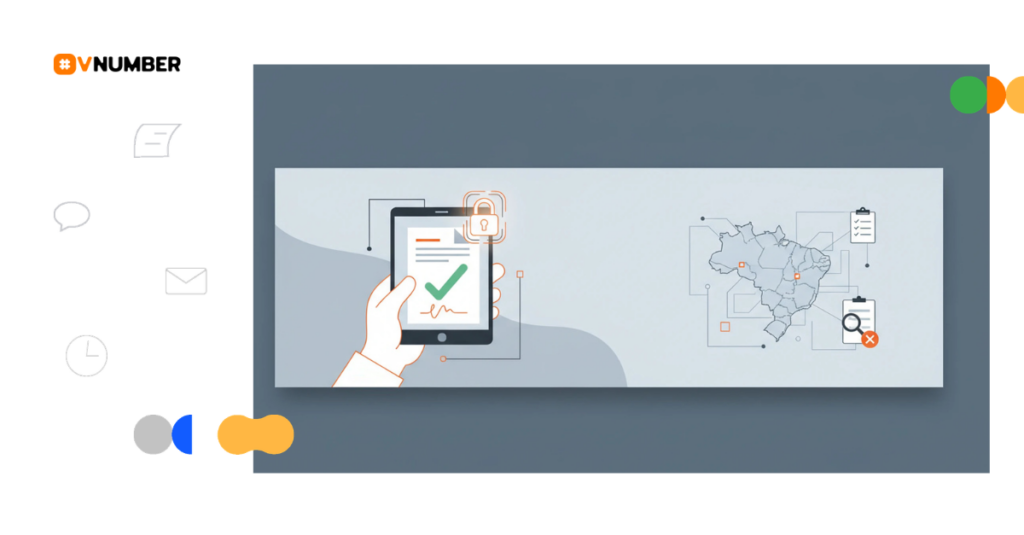
You found the apartment on QuintoAndar. You submitted your documents. The platform approved your profile. And then, right at the contract signing step, a token was sent to a number that cannot receive the message. The process stops.
For expats, remote workers, and foreign tenants trying to rent in Brazil through digital platforms, this can be a common friction point. The signing flow depends on a code delivered to your phone, and if that delivery fails, the contract may not move forward.
Understanding what that token does, why a Brazilian number often matters, and what you can control before trying again can save you time and frustration.
Token verification in contract signing
Platforms like QuintoAndar and Loft use digital contract signing flows that rely on electronic signatures rather than physical ones.
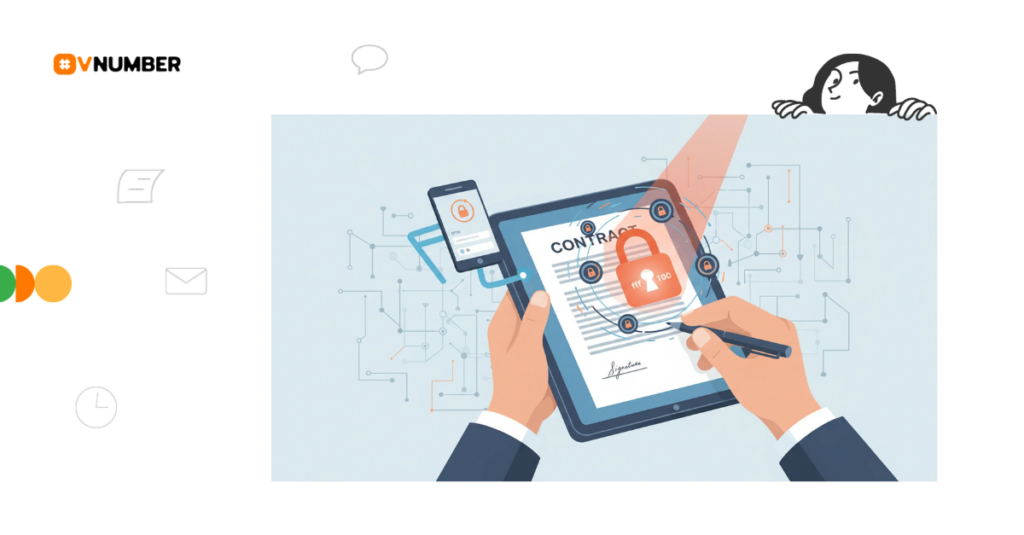
Under Brazilian law, electronic signatures can carry legal validity depending on the signing framework and the parties involved.
In this context, the token is part of how the platform helps confirm that the person clicking sign is the same person who was approved during the identity check.
The token itself is a short numeric code, usually 4 to 6 digits, sent by SMS to the phone number registered on your account. It usually serves two purposes in the signing flow:
Identity continuity
The platform links your verified identity, including CPF, documents, and selfie checks, to a phone number. The token helps confirm that the person signing still controls that number at the time of execution.
Signature authorization
The token acts as a one time authorization code. Without it, the platform may not execute the digital signature on the contract.
The token is not a digital certificate in the ICP-Brasil sense. It works more like an internal verification layer the platform uses to authorize the signature event.
But if you cannot receive it, the contract may remain stuck even if your documents and identity were already approved.
Common token failure causes
Token delivery may fail more often than tenants expect, especially for people signing from outside Brazil or using temporary phone setups. In many cases, the issue is related to how the phone number behaves during the verification window.
Platforms like QuintoAndar typically work better with a functioning Brazilian number that can receive SMS reliably at the moment the token is triggered.
If the number is foreign, virtual without proper Brazilian routing, temporarily disconnected, or tied to a prepaid SIM that expired, the message may bounce or arrive too late for the code to be useful.
Token delivery by number type
| Setup | Token delivery reliability | Common issue |
|---|---|---|
| Active Brazilian SIM, postpaid, in country | High | Rarely fails if the signal is stable |
| Active Brazilian SIM, prepaid and maintained | High | May fail if the line was deactivated for inactivity |
| Foreign number, US, EU, or other | Very low | Platform may not send internationally, or delivery may fail |
| Temporary virtual number, free services | Very low | Number recycling and poor SMS reliability |
| Stable Brazilian virtual number, dedicated | High | Usually works when routing and SMS support are consistent |
Anything outside that pattern may introduce extra friction into the signing flow. A few less obvious causes can also matter:
Number format mismatch
If the number is entered with the wrong country or area code, delivery may fail immediately.
Carrier filtering
Some carriers may delay or block platform generated SMS messages.
SIM deactivation
Brazilian prepaid SIMs can be deactivated after long periods without recharge. If you left Brazil months ago and stopped topping up, the number may no longer work.
Timing
Tokens usually expire quickly. If the message is delayed by international routing or other delivery problems, it may arrive after the window closes.
Pre signing verification checklist
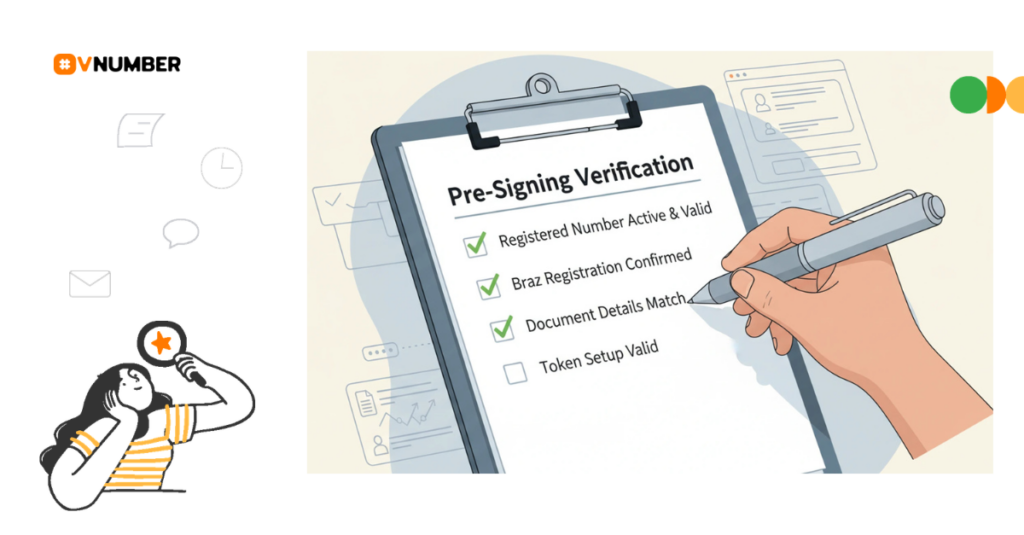
Before retrying, work through these checks in order:
• Confirm that the number on your profile is active and Brazilian
• Test whether that number receives SMS right now
• Check whether your prepaid SIM or virtual number service is still active
• Review whether your CPF, name, and uploaded ID match the information on the platform
• Make sure your connection setup is not creating unnecessary location mismatches
If the token step already failed once, repeating the exact same flow with the exact same setup may produce the same result again. A few details matter most here:
Your registered number is active and Brazilian
Log into the platform and check the number saved in your profile. If it is foreign, you may need to update it before requesting a new token.
Your number receives SMS right now
Send yourself a test message or ask someone in Brazil to text you. If messages are not arriving, the token may not arrive either.
Your SIM or virtual number is not expired
For prepaid Brazilian SIMs, check with the carrier, such as TIM, Claro, or Vivo, whether the line is still active.
For virtual numbers, confirm the service is active and supports SMS properly. It is also worth taking a moment to better understand the risks of virtual numbers before relying on one for contract signing.
Your profile matches your documents
Some signing failures may start earlier in the chain. If your CPF, name, or ID details do not line up with what you submitted during verification, the platform may add friction before the token step.
Your session setup is consistent
Some platforms may apply extra caution if the IP location and the number’s country setup look inconsistent.
Remote signing process
Signing a Brazilian rental contract from outside the country is possible when the full digital flow is set up correctly.
The platforms do not necessarily require physical presence. What they do require is identity verification, document approval, and successful token delivery.
If those pieces are in place, the contract can usually be executed digitally regardless of where you are.
That is why number continuity matters so much. The issue is often not that remote signing is impossible. The issue is that one practical part of the infrastructure was not prepared in advance.
For tenants living outside Brazil, this is where a more stable setup becomes useful. If the contract signing process may depend on a token, and that token depends on a working Brazilian number, then keeping that number active over time becomes part of the preparation, not just a technical detail.
For people who need a reliable Brazilian number specifically for contract SMS, rental platform verification, and ongoing landlord communication, VNumber can fit naturally into that process.
It helps support continuity by keeping a stable number active while you are abroad, which can reduce one of the most common points of failure in remote signing.
If you need a stable Brazilian number for contract tokens, verification, and rental communication, get your number with VNumber and keep your access active wherever you are:
https://www.vnumber.com/get-your-number
Frequently Asked Questions
Is the token part of the legal signature or just a platform verification step?
The token is usually a verification mechanism the platform uses to authorize the electronic signature event. It is not the same thing as an ICP-Brasil digital certificate, but it may still be required by the platform before the contract can be executed.
Can I sign a QuintoAndar contract with a foreign phone number?
In many cases, the platform works better with a Brazilian number for SMS token delivery. Foreign numbers may fail because of routing limitations, carrier filtering, or format mismatches.
What if my Brazilian prepaid SIM was deactivated?
Contact your carrier and confirm whether the line is still active. Brazilian prepaid SIMs may be deactivated after a period without recharge, depending on the carrier. If the number is gone, you may need a new Brazilian number before retrying the signing process.
Can I use a virtual Brazilian number for contract signing?
Yes, provided the number has consistent Brazilian routing and reliable SMS support. Free or temporary numbers are usually riskier because they may be recycled or filtered more often.
Do I need to be in Brazil to complete the signing?
Remote signing is often possible. What usually matters more is having a verified identity, approved documents, and a working Brazilian number that can receive the token at the right moment.
