
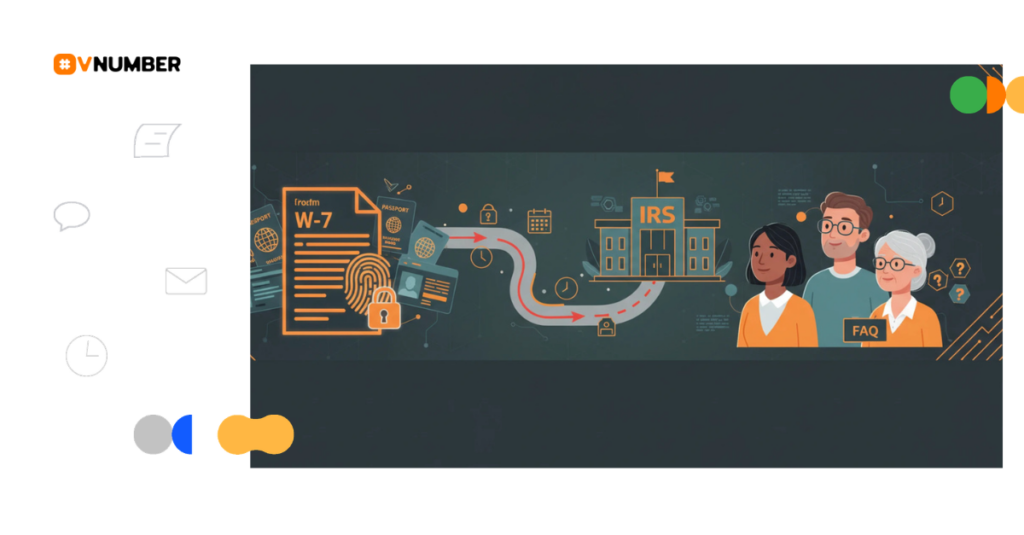
For many non US residents, the ITIN only becomes relevant when a financial or tax obligation makes it unavoidable. A US client asks for tax documentation.
Rental income starts coming from a property in Florida. Withholding looks higher than expected and treaty benefits suddenly matter.
On paper, the process looks manageable. From abroad, it often becomes slower and harder to control. Documents must line up, identity must be verified correctly, and even small communication gaps can stretch the timeline.
That is why preparation matters so much. When you understand what the IRS expects, organize the right documents, and keep your contact details stable throughout the process, the application becomes far easier to manage.
What is an ITIN and who needs it
An Individual Taxpayer Identification Number is a nine digit tax processing number issued by the IRS to people who have US tax obligations but are not eligible for a Social Security Number.
It does not provide work authorization. It does not create immigration benefits. Its purpose is tax administration.
Common reasons non US residents apply for an ITIN
• Filing a US federal tax return for US source income
• Claiming tax treaty benefits to reduce withholding
• Being listed as a spouse or dependent on a US tax return
• Opening certain US financial accounts that request a taxpayer identification number
• Meeting reporting obligations tied to US property or investment income
Living outside the United States does not prevent someone from applying. For many foreign applicants, the real difficulty is not eligibility but managing the process from abroad.
Form W 7 and identity documentation requirements
Most ITIN applications begin with Form W 7. This form tells the IRS who you are, why you need the number, and what tax purpose supports the request.
The main point of friction is usually not the form itself, but the identity documentation that must accompany it. The IRS requires original documents or properly certified copies that prove both identity and foreign status.
| Document type | What it proves | Key detail |
|---|---|---|
| Valid passport | Identity and foreign status | A passport alone usually covers both requirements |
| National ID card | Identity | Must show name, photo, address, date of birth, and expiration |
| Birth certificate | Foreign status or identity for some dependents | Often relevant for dependents under 18 |
| Foreign driver’s license | Identity | Generally accepted only if it includes a photograph |
A current, unexpired passport is usually the simplest option because it covers both identity and foreign status in one document.
Without a passport, applicants often need at least two separate documents from the IRS list.
There is another detail that matters: not every copy is accepted. Certifications typically need to come from the issuing government agency or from a US embassy or consulate. Local notarized copies may not meet the standard the IRS expects.
An alternative many applicants consider
Some applicants use a Certified Acceptance Agent, also known as a CAA. A CAA can review original documents in person, certify them, and submit the application package without requiring the applicant to mail an original passport directly to the IRS.
For many foreign applicants, that reduces one of the most uncomfortable parts of the process.
Common delays and timeline factors
The IRS states a standard processing estimate of seven weeks for complete ITIN applications. For foreign applicants, the real timeline can often be longer because mailing, document review, and follow up requests add extra layers.
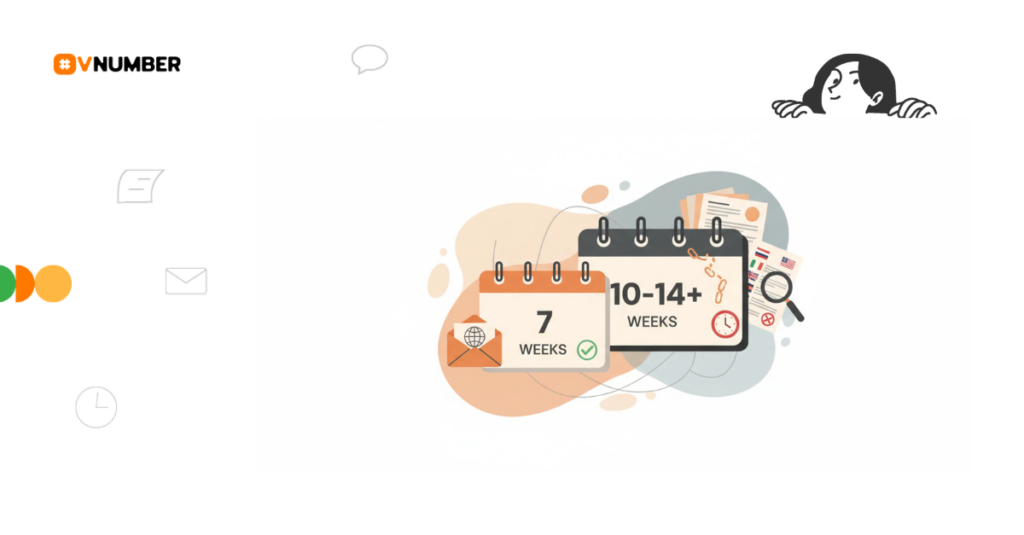
A wait of 10 to 14 weeks, and sometimes more, is not unusual when the application is being managed from abroad.
Frequent sources of delay
• Problems with document certification
• Missing or incomplete supporting materials
• Additional IRS requests sent by mail
• International delivery times in both directions
• Changes in contact details while the case is still open
Some of these delays start small. A document issue that takes a few days to identify can become weeks by the time a letter reaches an overseas address and a response is sent back.
| Issue | Likely consequence |
|---|---|
| Certified copies do not meet IRS standards | The IRS may request additional documentation |
| Mailing from outside the US | Each exchange may add extra weeks |
| Contact details change mid process | Follow up becomes harder and delays can grow |
| Original documents are mailed without backup planning | The applicant may face extra stress and slower resolution |
Why contact continuity matters
This is one part of the process that gets underestimated.
An ITIN application can remain active for several months. During that time, the IRS or a Certified Acceptance Agent may need clarification, updated documents, or a response to an issue that was not obvious at the time of filing.
If your contact setup changes in the middle of that timeline, the process can become harder to manage.
| Contact setup | What may happen during a 3 to 5 month process |
|---|---|
| Temporary prepaid US number | The line may expire or lose credit before the case is resolved |
| Foreign number only | Daily communication may work, but some US based systems may not support verification callbacks or codes reliably |
| Stable long term US number | Contact continuity is easier to maintain across the full process |
A stable US number does not accelerate IRS processing. It does not guarantee approval. But it can reduce communication gaps at moments when consistency matters.
That becomes more relevant when the ITIN is part of a broader financial setup involving US banking, tax identity, or account verification after the application is filed.
For applicants who need that kind of continuity, VNumber can fit naturally into the process by providing a long term US number that stays active throughout the application period and beyond.
A practical checklist before you apply
Before sending Form W 7, it helps to confirm these basics:
• Your tax purpose for the ITIN is clearly documented
• Your supporting documents are current and valid
• Your certification method meets IRS standards
• Your mailing plan is realistic if you are applying from abroad
• Your contact details will remain stable for the next several months
This kind of preparation does not remove every delay. It does reduce the avoidable ones.
If maintaining a stable US contact number is part of your setup, VNumber can help you keep that continuity in place throughout the ITIN process and the services connected to it:
https://www.vnumber.com/get-your-number
Frequently Asked Questions
Can I apply for an ITIN if I live outside the United States?
Yes. Foreign applicants can submit Form W 7 from outside the United States, either by mail or through a Certified Acceptance Agent.
Do I need a US phone number to apply for an ITIN?
No. A US phone number is not listed as a formal requirement for Form W 7. Still, having a stable US number can make follow up communication and continuity with US based services easier during a long process.
How long does the ITIN process usually take for foreign applicants?
The IRS publishes a seven week estimate for complete applications, but foreign applicants often experience longer timelines because of mailing, document review, and possible follow up requests.
Is it better to apply through a Certified Acceptance Agent?
For many applicants, it can be. A CAA may help reduce document friction and avoid the need to mail an original passport directly to the IRS.
What happens if the IRS asks for more documentation?
The process can slow down because the request is usually sent by mail, and the response also has to travel back through the same channel. This is one reason document accuracy matters so much at the start.
What if my phone number changes during the process?
It may become harder to manage follow up, especially if that number is connected to other US services tied to your tax identity. A stable long term number helps reduce that risk.
Do I need to send my original passport to the IRS?
If you apply directly by mail, the IRS may require original documents or properly certified copies. Working with a CAA can help many applicants avoid mailing originals.
