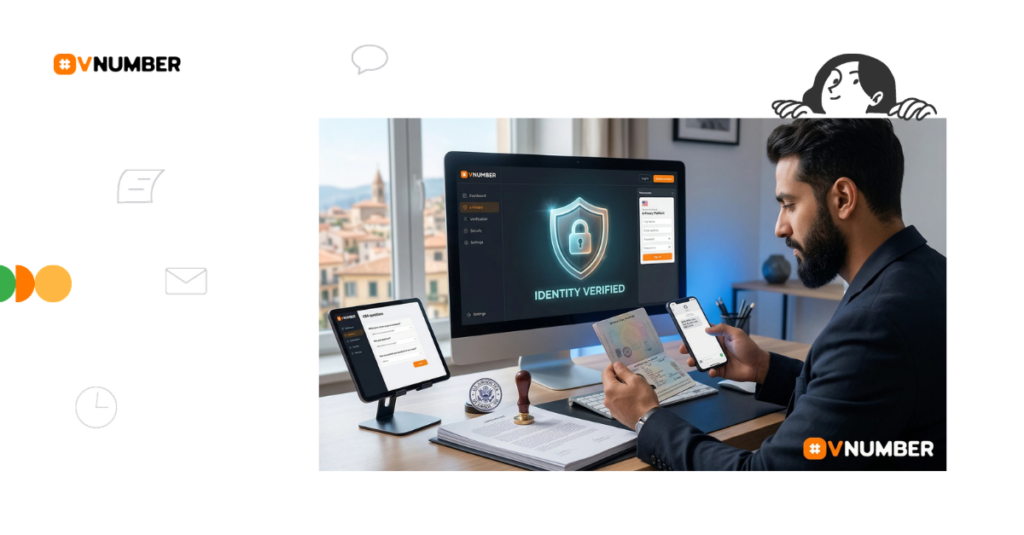
Identity verification can be the biggest hurdle for people who need online notarization while living outside the United States. Most users focus on the wrong step.
They worry about the video call, the notary’s questions, or whether the document itself will be accepted. In practice, the real friction often appears earlier, during the multi layer verification process that happens before the session even begins.
Many platforms such as Notarize.com, Proof, and NotaryCam follow a broadly similar sequence:
• You upload a government issued ID and the system checks it for authenticity
• The platform compares that ID to the information on your account
• KBA, or knowledge based authentication, may generate questions from US credit and public record data
• Many platforms rely on SMS verification tied to a standard US phone number
• Only after those steps clear do you reach the live notary session
This layered process exists because RON, or remote online notarization, carries legal effect.
The notary is acting as a digital witness to your signature, and the platform needs to be reasonably confident that the person on screen is the person named in the document.
That eligibility question matters too. Not every document qualifies for online notarization. Not every state allows the same use cases. And not every platform accepts signers located outside the US.
Checking those details before you begin can save time and reduce the frustration of failing near the end of the process.
Where identity verification often fails from abroad
Each verification layer can create a different problem for people living or traveling outside the United States.
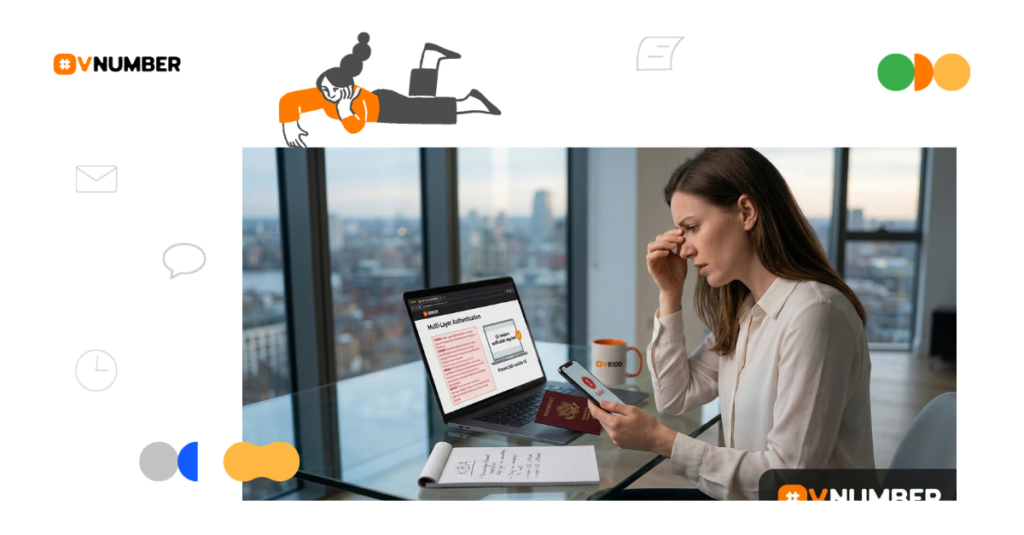
KBA is often the first major obstacle. The questions are usually based on information from US credit bureaus such as Equifax, TransUnion, and Experian.
If you have lived abroad for years, your US credit footprint may be thin, outdated, or incomplete. In that situation, the platform may generate questions that are difficult to answer, or it may not generate usable questions at all.
SMS verification is another common issue. Many platforms rely on a one time code sent to the phone number tied to your account.
If you no longer control your old US number, switched to a local SIM abroad, or are using a setup that does not receive US SMS reliably, the code may never arrive. The timer expires, and the session gets blocked before notarization even starts.
Document matching adds another layer of friction. The name on your ID usually needs to match the name on the document and the name on the platform account.
Expats dealing with name variations across passports, marriage records, or foreign IDs may run into mismatches that trigger manual review or rejection.
The further you are from a standard US identity footprint, the more points of friction you may face.
Why a stable US number still matters
A stable US phone number does not solve every verification issue. It does not improve your KBA results, and it does not change whether a platform accepts your document type. What it can do is reduce one common failure point in the process.
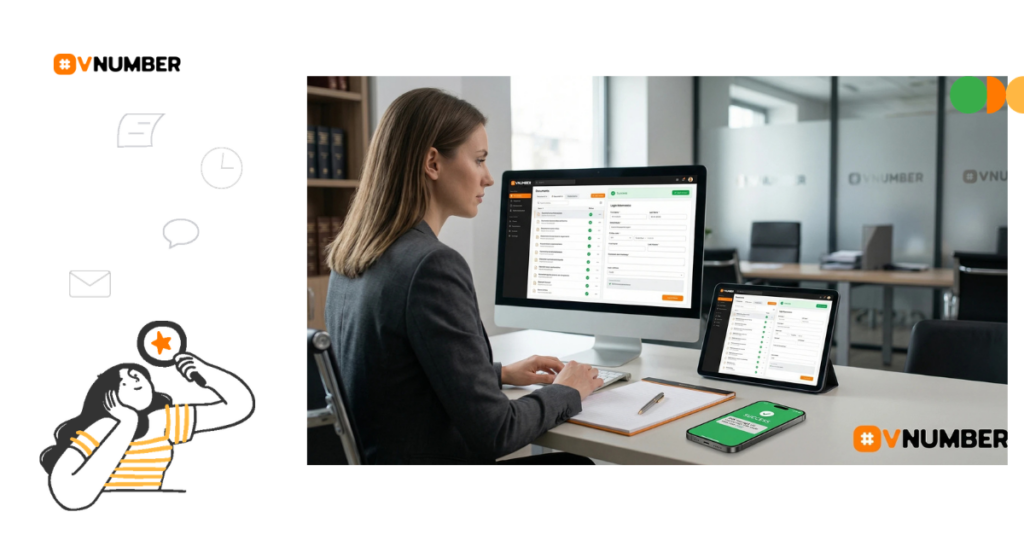
When a platform sends an SMS verification code and you receive it quickly, that step stops being the reason the workflow fails.
When your account stays tied to a number that continues working over time, you are less likely to run into lockouts during two factor authentication, account recovery, or follow up verification.
That continuity matters because legal workflows often involve more than one step. A document may need to be resubmitted. A follow up signing may be scheduled. An account may need to be accessed again days or weeks later.
A number that works today and disappears next week can create avoidable friction across the whole process.
For users handling powers of attorney, business filings, real estate paperwork, or estate planning from abroad, a missed code can delay everything downstream.
For people who need to keep a working US phone number tied to a legal workflow while living outside the country, VNumber fits more naturally as a continuity tool.
The point is not to bypass the verification process. The point is to help maintain access to SMS verification, account recovery, and ongoing session continuity when the process extends over time.
If you need a stable US number for notarization related verification, account continuity, and legal document workflows, get your number with VNumber and keep your access active wherever you are:
https://www.vnumber.com/get-your-number
What to check before you start
Preparation often determines whether online notarization feels simple or turns into a multi day frustration. Before opening a platform, work through these points:
Pre session checklist
• Confirm that the specific platform accepts signers located outside the United States
• Verify that the document type qualifies for RON under the relevant state rules
• Make sure the name on your ID matches the name on the document and on your account
• Test whether your US phone number receives SMS from US based senders without delay
• Check whether your KBA profile is likely to be usable if you have been abroad for years with little recent US credit activity
Some platforms may offer alternative verification paths if KBA is not workable, but not all do. A real estate document governed by one state may follow a different path from a business filing governed by another.
The notary session itself may take only a few minutes. The identity setup that makes the session possible usually takes more care.
Frequently Asked Questions
Can I use my foreign passport for online notarization?
Many platforms accept a foreign passport as government issued ID. The key requirement is usually that the name matches across your ID, the document, and the platform account. Any variation may trigger manual review or rejection.
What happens if I fail KBA questions multiple times?
Multiple KBA failures may lock you out of the platform temporarily, and sometimes longer, depending on the provider. Some platforms offer alternative verification methods, but many do not.
Do all US states allow remote online notarization?
No. State rules vary. Some states allow RON, but the document type, the notary’s commission, and the governing legal framework may still affect eligibility.
Can I use WhatsApp or other messaging apps for verification codes?
Many platforms rely on SMS verification sent to a standard US phone number. App based messaging services usually do not work the same way for identity verification.
How long does the verification process take?
If everything goes smoothly, identity verification may take 10 to 30 minutes. If any step fails, the process can take much longer, especially when manual review or account recovery becomes necessary.