
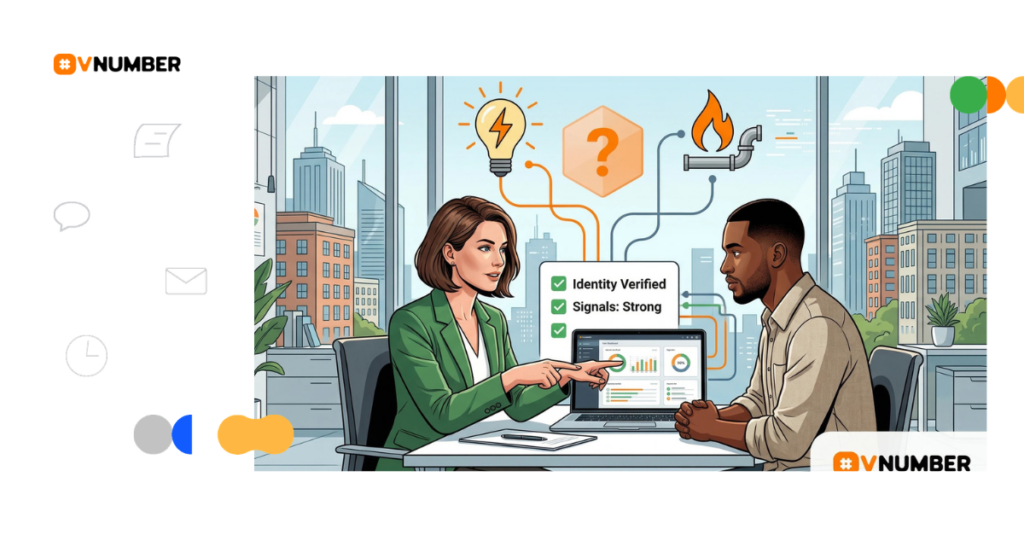
Why Utility Companies Need Your Social Security Number—and What Happens Without It
You call ConEdison, PG&E, or your local utility to activate electricity or gas at a new address. The representative asks for your SSN.
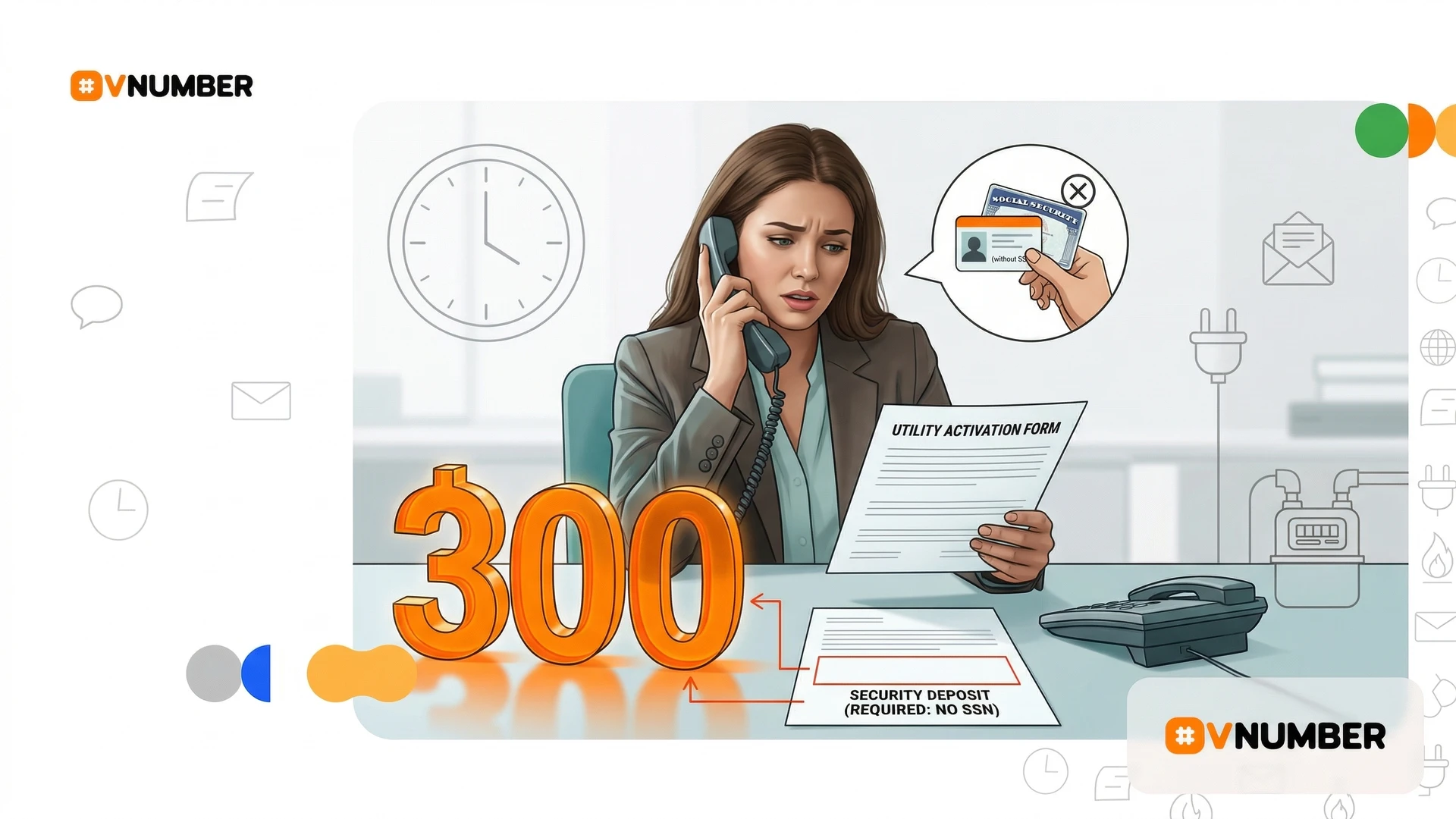
You do not have one, or you would rather not provide it. A few seconds later, the system flags your application and requests a security deposit of $200 to $400 before service begins.
Most people assume this is a standard fee everyone pays. It usually is not. The deposit can be a response to what the utility company could not confirm about you during the signup process.
Every missing or inconsistent piece of information can raise the perceived risk. When you can’t provide a social security number, the utility loses direct access to your US credit file—one of its strongest verification signals. The deposit is how the company offsets that risk before activating service at an address it cannot fully tie to a verified person.
Understanding that mechanism changes the whole approach. The deposit is not always a wall. It is often the result of a risk calculation, and several of the inputs behind that calculation are things you may be able to influence before starting service.
How Utility Companies Verify Your Identity Without a Social Security Number
When you apply for electricity or gas service, the utility may run a quick identity and credit verification. That review can pull from several data points at once.
Your SSN connects to a US credit file, which helps the provider assess whether you have a history of paying bills. When you lack a social security number, utilities rely on alternative verification methods. Your name and address feed into identity verification databases.
Your US phone number may also be part of the provider’s broader verification and fraud screening process, especially if the number looks temporary, disposable, or inconsistent with the application.
Each signal that comes back clean can reduce perceived risk. Each signal that comes back empty or mismatched can increase it.
For someone without an SSN, the credit check may return nothing. That removes one of the strongest signals the utility has for evaluating payment history.
For someone who recently moved to the US, the address history may be thin or nonexistent. For someone using a temporary phone number or a foreign mobile number, the contact verification may fail or be treated as weaker.
These gaps do not necessarily mean do utility companies need your social security number to suspect fraud. In many cases, they mean the system cannot confidently distinguish you from someone it cannot fully assess.
The difference matters. A fraud flag can trigger a hard stop, sometimes requiring an in-person visit with government ID.
A verification gap can trigger a deposit, which is the company’s way of saying it may still provide service, but it wants collateral until more confidence is built.
The compounding effect often catches applicants off guard. Missing one signal, such as no SSN, may result in a moderate deposit. Missing two or three signals can push the deposit higher and may trigger additional verification steps that delay activation.
Missing Signals and Their Effect
| Missing or weak signal | Possible effect on signup |
|---|---|
| No SSN | Credit check may return no history |
| Thin address history | Identity matching may be weaker |
| Foreign or unstable US phone number alternative | Verification may fail or slow down |
| No prior utility history | Deposit may be harder to waive |
| Incomplete documents | Manual review may take longer |
How to Prevent Utility Account Fraud Flags and Reduce Security Deposits
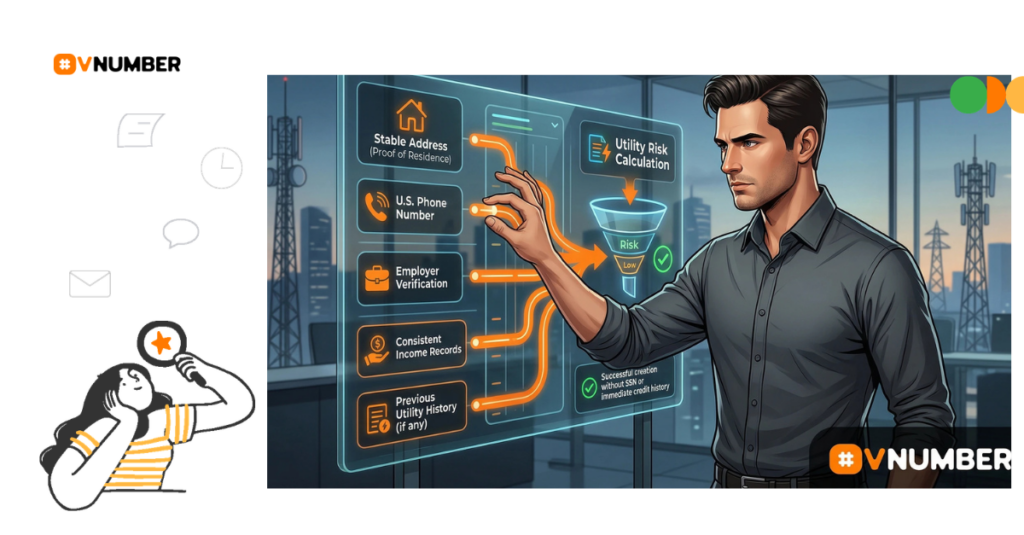
You cannot create a US credit history overnight. You cannot always provide a social security number. But you can control several other inputs that feed the utility’s risk calculation, and preparing them before you apply can make a meaningful difference.
Have a verifiable US phone number active before you start the process. Utility companies may send verification codes by SMS or automated calls during signup.
They may also use this number for account recovery and follow-up communication. If the number you provide is a foreign mobile, a temporary VoIP line, or a number that cannot receive US SMS, the verification step may fail.
That failure can add friction and increase the risk score. A stable US phone number that stays active throughout the setup process can provide a more reliable way for the utility to reach you and confirm your identity when you can’t provide a social security number.
For applicants setting up service from abroad or without a local SIM card, continuity becomes especially important.
If the provider cannot reach you when it needs to verify the account, one missing signal can affect the rest of the process. That is where a stable number setup starts to matter more.
In that context, Vnumber can fit naturally into the process by helping you maintain a US phone number for verification, follow-up communication, and account continuity while you are outside the country. With a virtual number, you can obtener un número virtual that works for utility signup, SMS verification, and ongoing account access—removing a friction point that could otherwise increase your security deposit.
Essential Documents to Prepare
Before you apply, have these ready:
• A government-issued photo ID, such as a passport for non-US residents
• Proof of address at the service location, such as a lease agreement, closing documents, or a landlord letter
• Your ITIN, if you have one, since some utilities accept it as an alternative to a social security number
• A previous utility bill from another US address, if available, to show payment history
• An active US phone number where you can receive verification messages immediately
It also helps to know what to ask the representative.
Some utilities accept an ITIN. Some allow a letter of credit from a previous utility provider. Others may waive part of the deposit if you enroll in autopay.
Asking directly about alternative verification paths can surface options the default online signup flow never shows you.
You should also ask about the deposit refund timeline. Many utility companies refund security deposits after consistent on-time payments.
Some apply the refund as an account credit, while others issue a check. Knowing that policy upfront helps you plan for the cost and confirms that the security deposit for new electricity connection may be temporary rather than permanent.
Understanding Identity Deposit Requirements: Why Utilities Request Security Deposits
If a utility cannot verify who you are, where you live, and how to reach you, the identity deposit becomes the default risk control.
Paying it may get your service activated, but the underlying verification gaps can remain and create friction later when you need to update your account, dispute a charge, or recover access.
In many cases, addressing those gaps early may work better than treating the deposit as the only issue.
A verified US phone number, proper documentation, and a clear conversation with the utility representative about alternative verification paths can turn a frustrating process into a more manageable one.
The deposit exists because the utility needs confidence. Every verifiable signal you provide can help build that confidence.
If you need a stable US phone number for verification, account continuity, and utility-related setup in the US, obtener un número virtual with Vnumber and keep your access active wherever you are:
https://vnumber.com/get-your-number/
Frequently Asked Questions
Can I set up electricity or gas service in the US without a Social Security Number?
Yes. Many major utility providers allow activation without an SSN, but the process usually involves alternative verification steps. Expect to provide a government ID, proof of address, and in many cases a security deposit. Some utilities accept an ITIN as a substitute. You can also strengthen your application by providing a stable US phone number and documented proof of address to reduce the risk assessment gap that a missing social security number creates.
Why did the utility ask for a $300 deposit when my neighbor paid nothing?
Your neighbor may already have had a US credit file with positive payment history tied to their SSN. The deposit amount often reflects the gap between what the utility could verify about you and what it needs to feel comfortable extending service. Without a social security number, you lose access to that credit file, so the utility compensates by requiring a higher security deposit. Each missing data point can increase the amount.
Will a US phone number guarantee that my deposit gets waived?
No. A US phone number alone does not eliminate the deposit. But a stable, verified number can remove one friction point from the verification process, help you receive confirmation codes and account alerts, and keep your account accessible for recovery and follow-up. When combined with solid documentation and proof of address, a working US phone number strengthens your overall verification profile. Si querés profundizar, revisá USCIS V-Number text alerts setup.
How long before I get my security deposit back?
Many utilities refund deposits after consistent on-time payments. Some providers apply the refund as an account credit, while others issue a check. Ask your provider for its specific refund timeline during signup so you can plan your cash flow accordingly.
What happens if I cannot receive the verification code during signup?
The application may stall or fail the automated check, which can add another verification gap to your risk profile. The representative may offer manual verification, but that often takes longer and can sometimes result in a higher deposit. Having a working US phone number that receives SMS immediately can help reduce that friction and keep your activation on track.